Introduction
Introduction
Sexual reproduction is an essential process for almost all panmictic populations of organisms. Although organisms have different methods of sexual reproduction, there is a common basic process, i.e., two specialized sexually competent cells, which are determined genetically or developmentally, recognize each other and this leads to fertilization or conjugation. Land plants are thought to have evolved from charophyte algal ancestors. The extant charophyte algae consist of six recognized lineages: Mesostigmatophyceae, Chlorokybophyceae, Klebsormidiophyceae, Zygnematophyceae, Coleochaetophyceae, and Charophyceae. In the early diverging groups (Mesostigmatophyceae, Chlorokybophyceae and Klebsormidiophyceae), sexual reproduction is absent or unknown, whereas it is well known in the Zygnematophyceae (conjugating green algae), Coleochaetophyceae, and Charophyceae, although their life cycles have not been fully characterized. Recent evidence points to the zygnematophycean algae, which include genus Closterium, as the clade most closely related to early land plants.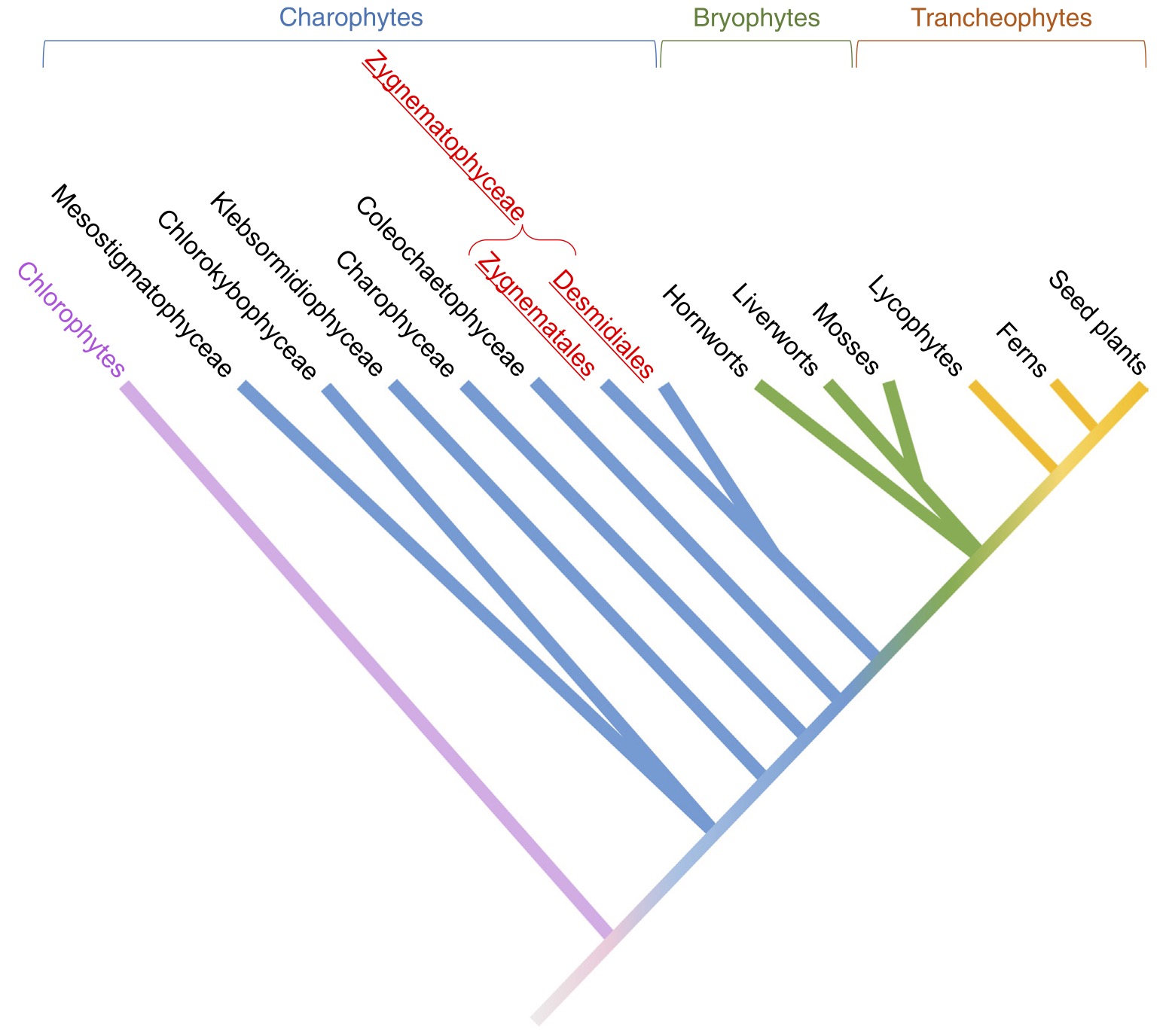
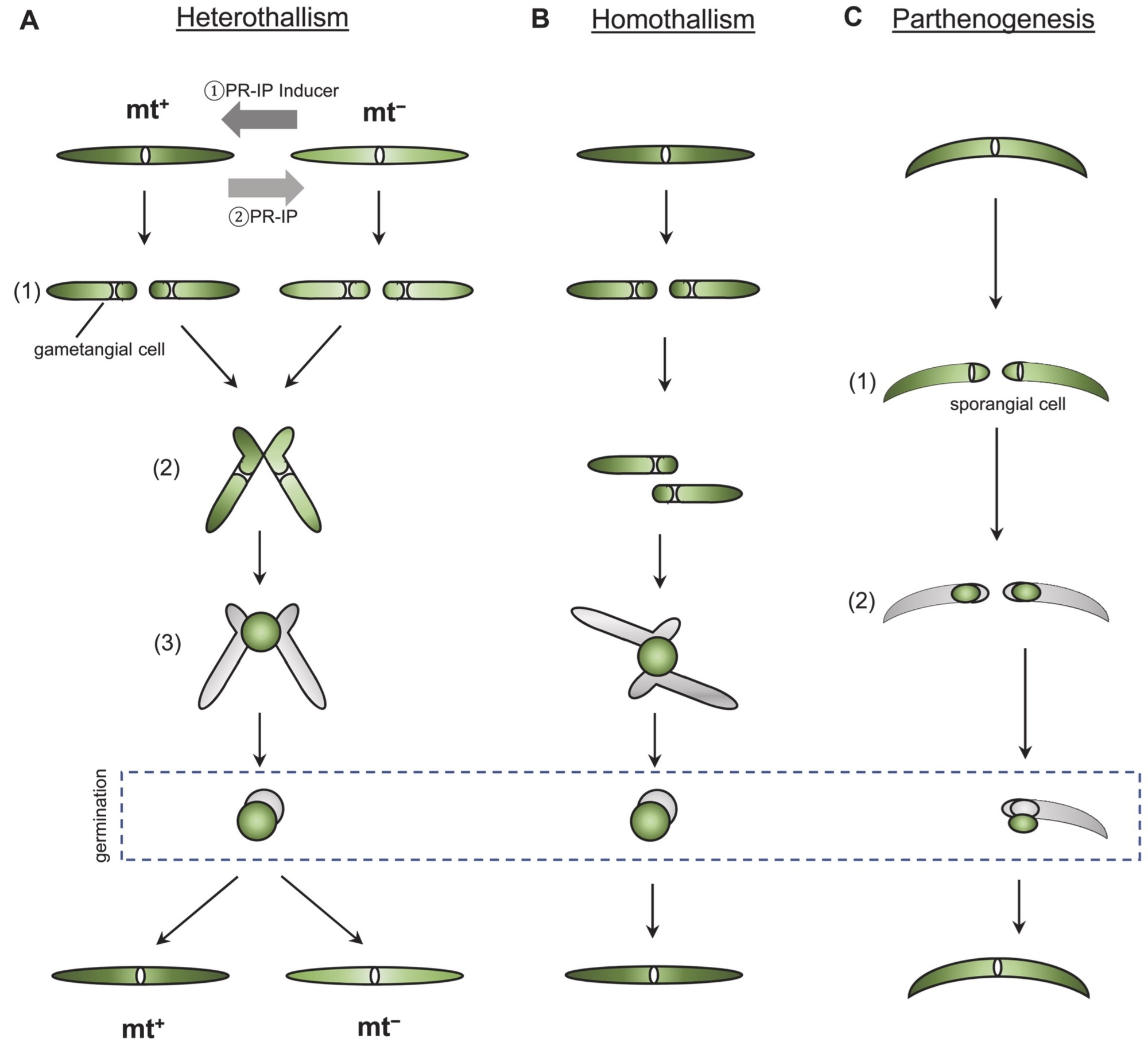
The genus Closterium is the best-characterized charophycean alga in terms of sexual reproduction. Zygospores form as a result of sexual reproduction between genetically determined mating type plus (mt+) and mating type minus (mt–) cells in heterothallic strains, or between clonal cells in homothallic strains. The intercellular communication and mating type determination for the successful sexual reproduction have been analyzed in Closterium. Using genomic information and transgenic techniques, the genus could be a model organism to study the mechanisms and evolution of sexual reproduction in streptophytes.